
There’s a moment every year that quietly separates businesses that finish strong from those that struggle to keep up. It’s not January, when motivation is high and plans are fresh. And it’s not December, when results are already locked in.
It’s July.
By now, the pace of the year has settled in. You’ve been working, selling, delivering, and solving problems. But in the middle of all that activity, one thing often gets pushed aside: your financial clarity.
And that’s where the risk lies.
Because without a clear understanding of your numbers, it’s easy to drift. Revenue might be coming in, but expenses could be rising just as fast. Clients might be active, but payments could be delayed. From the outside, everything looks fine—until it isn’t.
July is your wake-up call.
It’s your chance to stop operating on autopilot and take control of your financial direction before the second half of the year accelerates. With the right system in place, you can turn uncertainty into clarity and momentum into measurable growth.
That system is QuickBooks.
1. Stop Operating Blind—See What’s Really Happening
One of the biggest challenges for small business owners is the illusion of progress.
You’re busy, your calendar is full, and money is moving—but without proper tracking, you don’t actually know how your business is performing. You might assume you’re profitable when your margins are shrinking. You might overlook costs that are quietly eating into your revenue.
QuickBooks removes that uncertainty.
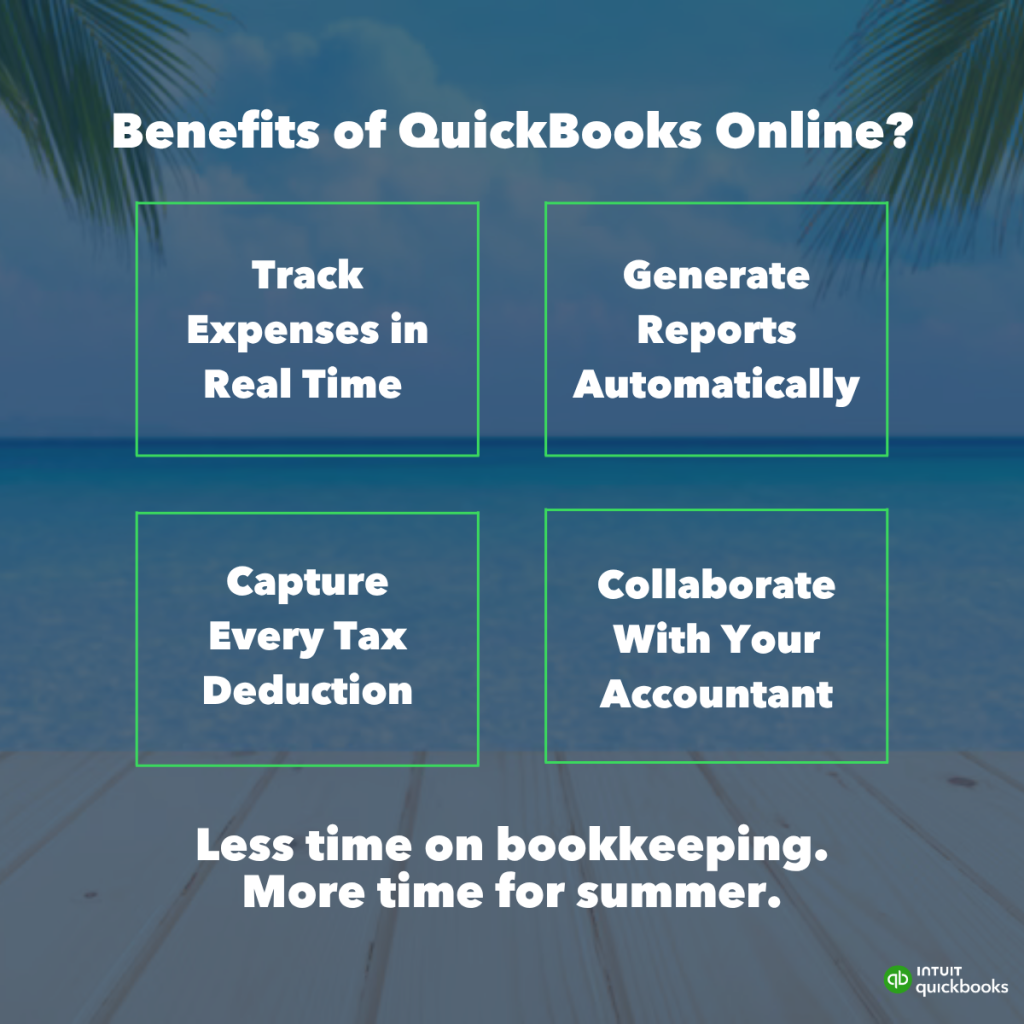
It gives you immediate access to detailed financial reports that show exactly where you stand. A mid-year profit and loss report breaks down your income and expenses, revealing your true financial position.
This clarity is more powerful than it seems.
It allows you to catch problems early, before they grow. It helps you identify opportunities you might have missed. And it gives you the confidence to make decisions based on facts instead of assumptions.
When you can see clearly, you can act decisively.
2. Fix Your Cash Flow Before It Becomes a Problem
Cash flow issues rarely happen overnight. They build slowly, often going unnoticed until they reach a critical point.
A few late payments here, a missed invoice there, and suddenly you’re dealing with gaps that make it difficult to manage expenses or invest in growth.
July is the ideal time to fix this.
QuickBooks helps you create a reliable invoicing system that keeps your cash flow consistent. You can send professional invoices quickly, automate reminders, and track every payment in one place.
This consistency changes everything.
Instead of worrying about when money will come in, you have a clear and predictable flow of income. You can plan ahead, make confident decisions, and avoid the stress that comes with financial uncertainty.
A healthy cash flow isn’t just about survival—it’s the foundation for growth.
3. Get Organized Now—or Pay for It Later
Financial disorganization has a way of compounding over time.
What starts as a few missing records or uncategorized expenses can turn into a major headache by the end of the year. And when tax season arrives, the cost of that disorganization becomes clear—lost time, increased stress, and potential errors.
QuickBooks helps you stay ahead of this problem.
By automatically syncing with your bank accounts and categorizing transactions, it keeps your records clean and up to date. You don’t have to manually track every detail—the system does it for you.
This ongoing organization saves you from the end-of-year scramble.
Instead of trying to reconstruct your financial history, you already have everything in place. Your data is accurate, your reports are ready, and your workflow remains smooth.
It’s a small shift now that prevents big problems later.
4. Use the Midpoint to Make Smarter Moves
The halfway point of the year is one of the most valuable moments for strategic decision-making.
You’ve gathered enough data to understand your performance, but you still have time to adjust your approach. The key is using that data effectively.
QuickBooks gives you the insights you need to do just that.
You can analyze trends, compare periods, and identify patterns that guide your next steps. Maybe you need to cut back on certain expenses. Maybe there’s an opportunity to scale a profitable service. Or maybe you need to adjust your pricing to improve margins.
Whatever the case, you’re making decisions with clarity.
This proactive approach allows you to enter Q3 and Q4 with a stronger, more focused strategy—one that’s built on real data, not guesswork.
5. Take Back Your Time and Mental Space
Running a business requires constant attention. But when too much of that attention is spent on financial admin, it limits your ability to grow.
Tracking expenses, managing invoices, and preparing reports can quickly consume your time if they’re not streamlined.
QuickBooks changes that.
By automating routine tasks, it reduces the amount of manual work required to manage your finances. This frees up your time and mental energy, allowing you to focus on higher-value activities.
You can spend more time building relationships, improving your offerings, and exploring new opportunities. Instead of being buried in financial details, you’re leading your business forward.
And that shift is where real growth happens.
Don’t Let the Second Half Catch You Off Guard
The rest of the year will move quickly. Opportunities will come and go. Challenges will arise. And the businesses that succeed will be the ones that are prepared.
July is your opportunity to get there.
It’s the moment to step back, take control, and build a financial system that supports your goals. With QuickBooks, you gain the visibility, organization, and efficiency needed to navigate the months ahead with confidence.
The first half of the year is behind you.
What matters now is how you move forward.
Take this moment seriously, get your finances in order, and make sure that when the year ends, you’re exactly where you want to be—or even further.